Hydroseeding vs Traditional Seeding: Pros and Cons
Starting a lawn from seed sounds straightforward until you stand in front of a large patch of bare Georgia soil. Should you spread dry grass seed by hand, or hire a crew to apply a hydroseed mixture? Both methods use seed, and both depend on good soil preparation, moisture, and timing. The biggest differences are how the seed is applied, how it is protected, and how much work falls on the homeowner.
Traditional seeding is usually the least expensive way to buy and apply grass seed. Hydroseeding costs more than spreading dry seed but can cover large or uneven areas quickly, hold moisture around the seed, and provide more uniform application. The right option depends on the site rather than one method being best for every lawn.
How Traditional Seeding Works
With traditional lawn seeding, dry seed is spread over prepared soil using a hand spreader, broadcast spreader, or slit seeder. The area may then be lightly raked or rolled to improve seed-to-soil contact. Straw or another cover is sometimes added to reduce drying and movement.
Traditional seeding has a low entry cost and uses equipment many homeowners already own or can rent. It is well suited to small areas, thin spots, and overseeding projects where established grass remains. The tradeoff is that even coverage takes patience. Seed can collect in low spots, blow across exposed soil, or move during heavy rain.
How Hydroseeding Works
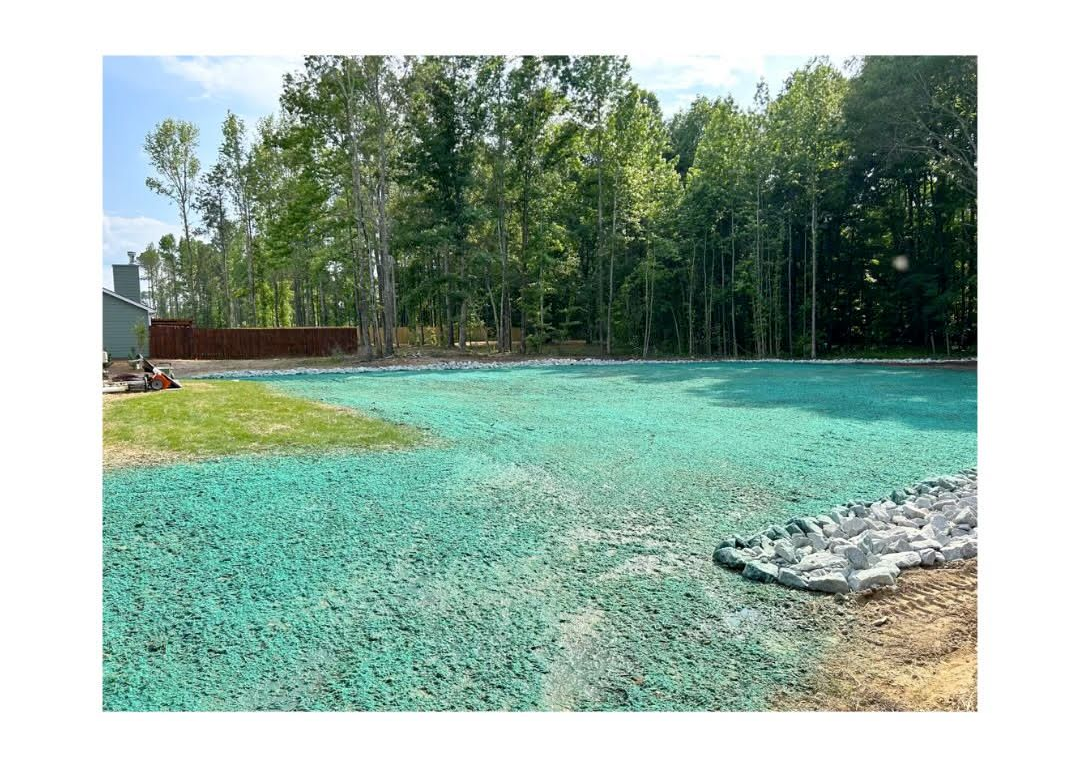
Hydroseeding combines seed, water, mulch, and fertilizer in a tank. The mixture is sprayed over a prepared seedbed through a hose. The colored mulch makes it easier for the applicator to see where material has been placed, and the mulch helps hold moisture around the seed during early germination.
The process can cover a large lawn faster than spreading, raking, and covering seed by hand. Seed blends can also be selected for the property’s sun exposure, soil, intended use, and growing season. Hydroseeding still requires daily attention after installation. The mulch should remain moist, and traffic needs to stay off the young lawn while seedlings develop.
Hydroseeding Pros
More Consistent Coverage
The spray application helps distribute material across open ground, around curves, and over broad areas. That can reduce obvious bands and missed sections that happen when dry seed is spread unevenly.
Mulch Helps Retain Moisture
Seed germinates best when it does not repeatedly dry out. The mulch in a hydroseed mixture creates a protective layer that helps retain moisture at the soil surface. It does not replace watering, but it gives the seed a more supportive environment than exposed dry seed.
Useful on Slopes and Difficult Ground
Dry seed and loose straw can shift on a bank during wind or rain. Hydroseed mixtures may include a tackifier that helps the material hold to the soil. This makes the method useful for slopes and areas where basic broadcast seeding is hard to manage. Serious runoff or standing-water problems should still be corrected before planting; drainage solutions may be part of the larger lawn plan.
Faster Application on Large Areas
A trained crew can apply hydroseed across a sizable property efficiently. That matters on new construction lots, commercial sites, long roadside areas, and large residential yards where hand seeding would take considerable time.
Flexible Seed Mixes
Hydroseeding can use a blend chosen for local conditions and the property’s needs. The right mix may differ between a sunny front yard and a shadier backyard. Grass selection should be based on light, season, maintenance expectations, and the amount of wear the lawn will receive.
Hydroseeding Cons
Higher Upfront Cost Than Dry Seed
Professional application includes specialized equipment, labor, mulch, fertilizer, and transportation. Hydroseeding generally costs more than a homeowner spreading a bag of seed. On a tiny repair area, the equipment minimum may make traditional seeding more sensible.
It Requires a Reliable Watering Plan
The mulch layer cannot be allowed to dry out for long periods during germination. Short, consistent watering cycles are commonly needed at first, with changes as the grass matures. Before scheduling the work, test sprinklers and make sure every section can be reached. If coverage is poor, professional irrigation services can help create a practical plan.
It Is Not an Instant Lawn
Hydroseeding can support fast germination, but the result still grows from seed. Weather, grass variety, soil temperature, and care all affect the timeline. A homeowner who needs a finished green surface immediately may prefer sod.
Traditional Seeding Pros
Lowest Initial Material Cost
For a small lawn or repair, buying seed and using a spreader is often the most affordable starting point. Homeowners can also divide the project into sections if time and budget are limited.
Easy for Small Repairs and Overseeding
Dry seed is convenient for narrow strips, thin patches, and established lawns that need additional density. A full hydroseeding setup is rarely necessary for a few small bare spots.
Simple to Repeat
If one area comes in thin, it is easy to loosen the surface and add more seed. Extra seed can be stored according to the label and used for later touch-ups.
Traditional Seeding Cons
Coverage Can Be Uneven
Spreader settings, walking speed, wind, and terrain all affect distribution. Applying half the seed in one direction and the other half at a right angle can help, but it still takes care to avoid streaks and missed areas.
Exposed Seed Can Move or Dry Out
Hard rain can wash seed downhill, birds may eat it, and sun or wind can dry the soil surface quickly. Straw can help, but it may move and can introduce unwanted seed if the material is not clean.
More Hands-On Labor
The work often includes measuring, spreading, raking, rolling, covering, repositioning sprinklers, and reseeding thin sections. Traditional seeding saves on professional application but may require more homeowner time.
Preparation Matters More Than the Application Method
Neither option performs well on hard, compacted soil covered with old vegetation or construction debris. The seed needs direct contact with loose, properly graded soil. A soil test can identify pH or nutrient issues, while grading can correct ruts and low spots before planting.
Use Elevate’s lawn preparation guide as a starting checklist. The same foundation—clear soil, a smooth grade, good drainage, and a watering plan—helps both hydroseeding and traditional seeding succeed.
Which Method Fits Your Project?
Traditional seeding may be the better fit when:
- The area is small or scattered
- You are overseeding an existing lawn
- The budget is tight and you can provide the labor
- The ground is flat and easy to reach
- You are comfortable correcting thin spots later
Hydroseeding may be the better fit when:
- The project covers a large bare area
- Even application is difficult with a spreader
- The property includes slopes or irregular edges
- You want mulch and starter material applied together
- You want a seed blend selected for the site
- Saving installation time is important
Some properties benefit from more than one method. A broad backyard may be hydroseeded while a few established front-lawn patches are repaired with dry seed. Sod may even be used in one high-priority section where immediate coverage is needed.
Set the Lawn Up for a Fair Start
The best method is the one you can support after installation. A well-applied seed will still struggle if the soil is compacted, water collects in low areas, or the surface dries out during germination. Plan the preparation and aftercare before buying seed or booking a crew.
Elevate Hydroseeding can assess the size, slope, sunlight, soil, and watering setup of your Georgia property. To compare professional hydroseeding with traditional seeding for your yard, schedule a consultation or call 770-589-4457. You will get a recommendation based on how the lawn is actually used, not just the method with the longest list of benefits.
Anthony
Anthony is a seasoned professional in the landscaping industry, boasting years of hands-on experience. As the founder of Elevate Hydroseeding, he has shaped the company's vision and success.
Throughout his career, Anthony has become a trusted figure in the world of landscaping. His passion for transforming outdoor spaces led him to establish Elevate Hydroseeding, a company dedicated to turning clients' landscaping dreams into breathtaking realities.